
Improved Dairy Shed
Type: Technologies
Creation: 2023-08-23 07:42 Updated: 2024-05-30 15:27
Compilers: Tshering Yangzom
Reviewers: William Critchley, Rima Mekdaschi Studer, Joana Eichenberger
Country/ region/ locations where the Technology has been applied and which are covered by this assessment
- Country: Bhutan
- Region/ State/ Province: Martang village, Dewathang gewog, Samdrup Jongkhar Dzongkhag
- Map: View Map
Description of the SLM Technology
Short description of the Technology
An improved dairy shed in Bhutan is characterized by concrete floors, cement pillars and troughs, enough sunlight and ventilation, adequate water, ample space for cattle movement, as well as urine and dung collection gutters and a farmyard manure collection area.
Detailed description of the Technology
The main characteristics of the improved dairy shed are concrete floors, cement pillars and troughs, enough sunlight and ventilation, adequate water, ample space for cattle movement, urine and dung collection gutters, and a farmyard manure (FYM) collection area. The main purposes are to (a) enhance the overall well-being of animals, (b) optimize animal production, (c) minimize forest grazing and promote stall feeding, (d) increase the availability of FYM and urine for application to croplands, (e) develop pasture with fodder grasses, and (f) provide a comfortable working environment for land users.
The main inputs needed for establishment are cement for concrete floors, pillars, and troughs, and corrugated galvanised iron (CGI) sheets for roofing. The principal activities needed to maintain the technology are undertaking stall feeding instead of forest grazing, developing improved pasture with fodder grasses and trees, replacing low-yielding local cows with improved breeds dairy breeds such as Jerseys through buying or breeding (naturally or through Artificial Insemination [AI]), and better waste management.
The benefits of the technology include (a) the addition of nutrients to fields through the application of FYM and cattle urine, (b) an associated increase in organic matter, (c) better soil moisture retention, (d) availability of good quality fodder and a diverse range of forage options, (e) reduced labour due to less wild fodder collection and herding in the forest, (f) efficient waste utilization, (f) the potential manufacture and use of renewable biogas instead of liquid petroleum gas (LPG), (g) reduced land degradation due to reduction in forest grazing, (h) increased vegetation cover due to improved pasture development, (i) less soil compaction through decreased trampling by animals, (j) more comfortable working environment for land users, (k) improved livestock health and animal welfare, and (l) improved livelihoods of farmers through higher farm income. Besides these benefits, land users like the durability of the new sheds. However, one of the constraints of the technology is that the land users may lack funds to construct the sheds, or for improved cattle breeds, to justify the extra investment. These can hopefully be overcome by government support to land users through cost-sharing measures.
Photos of the Technology
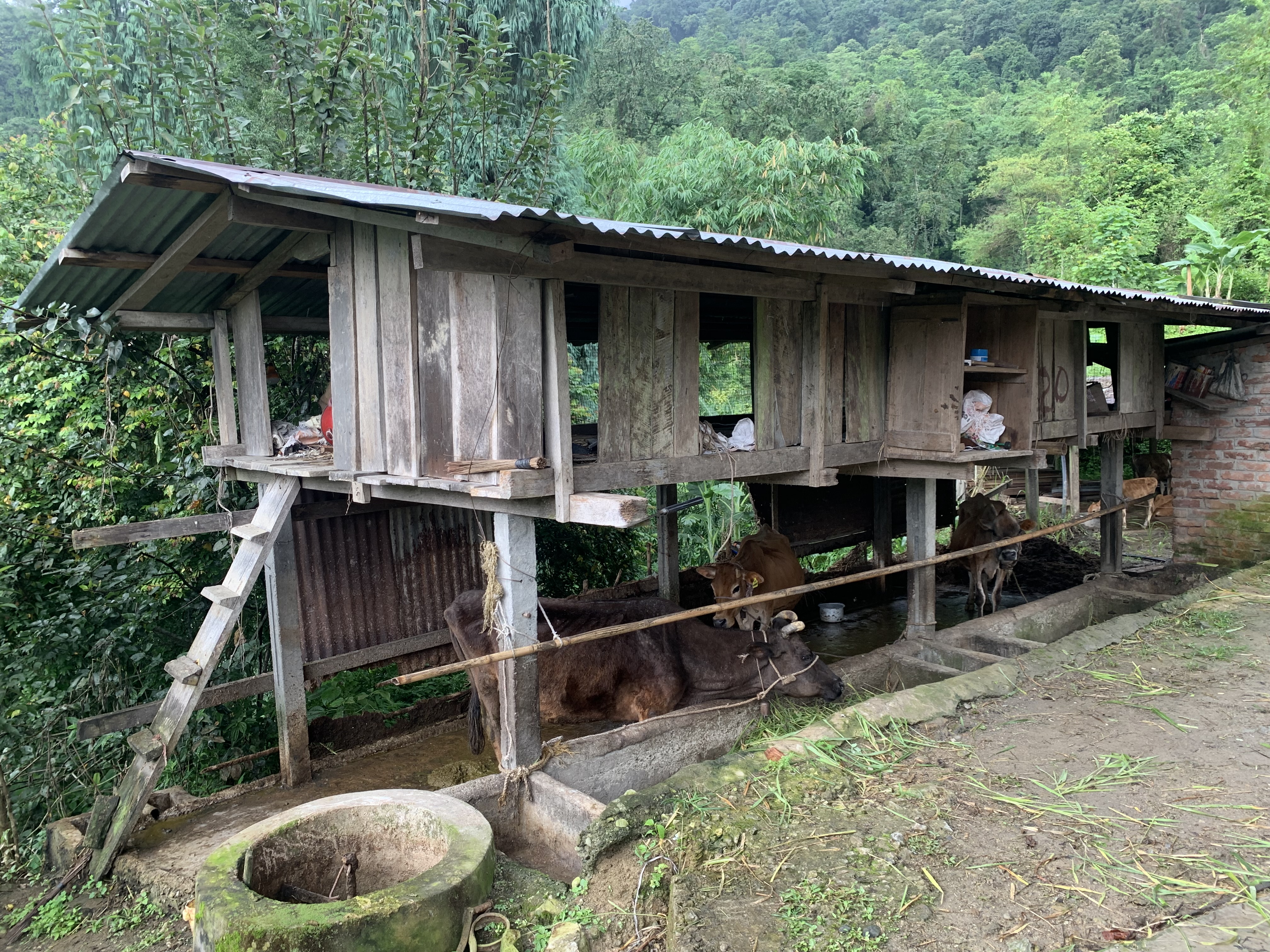
- 📍 Martang village, Dewathang gewog, Samdrup Jongkhar Dzongkhag
- 🗓 2023-10-07
- 📷 Tshering Yangzom
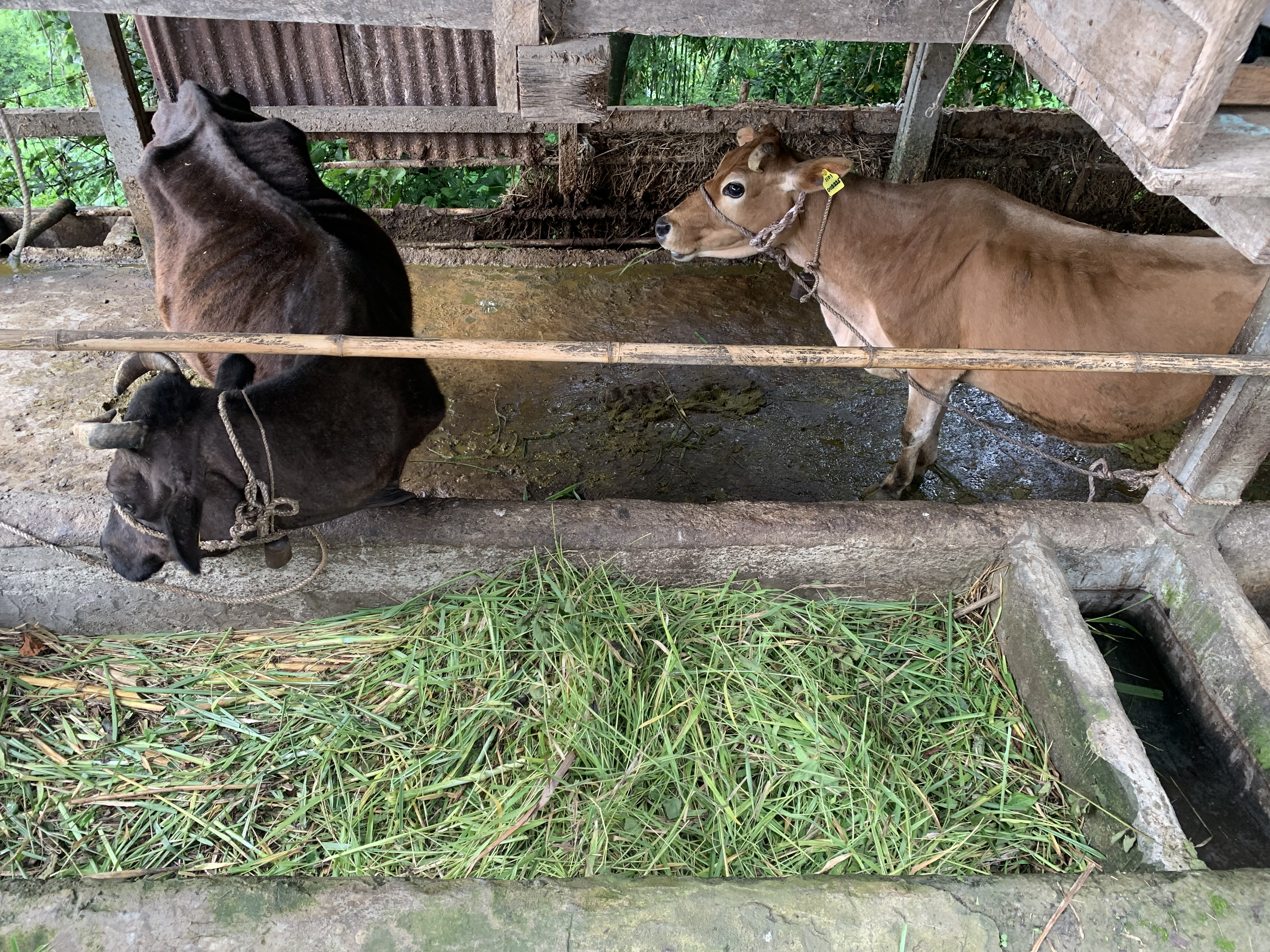
- 📍 Martang village, Dewathang gewog, Samdrup Jongkhar Dzongkhag
- 🗓 2023-10-07
- 📷 Tshering Yangzom