
Solar Mobile Dryer (SMD)
Type: Technologies
Creation: 2024-06-07 09:38 Updated: 2024-07-15 10:51
Compilers: Joren Verbist
Reviewers: William Critchley, Rima Mekdaschi Studer
Country/ region/ locations where the Technology has been applied and which are covered by this assessment
- Country: United Arab Emirates
- Map: View Map
Description of the SLM Technology
Short description of the Technology
The innovative Solar Mobile Dryer (SMD) developed by ICARDA addresses climate change challenges for date palm growers in the Gulf Cooperation Council (GCC) countries by improving fruit quality, reducing waste, saving energy, and enhancing profitability, thereby supporting sustainable and efficient agricultural practices.
Detailed description of the Technology
In the Middle East, the date palm is an essential crop with significant cultural and economic value, thriving in dry, arid, and hot climates. However, climate change is exacerbating production challenges, with higher temperatures, heatwaves, water scarcity, harsh winds, leading to poor pollination, and increased pests amongst other issues. Small-scale date palm producers in the Gulf Cooperation Council (GCC) countries face additional problems of managing unsold or excess produce. Short harvesting periods and high deterioration rates of some date varieties make the situation worse. A common solution to extend shelf life is freezing. However, this has several drawbacks including storage and handling difficulties, nutrient and flavour degradation, and high energy costs.
To tackle these post-harvest challenges, the International Center of Agricultural Research in Dry Areas (ICARDA) developed an innovative Solar Mobile Dryer (SMB) for drying dates, achieving the desired colour for marketing while shielding the produce from dust and rain. The mobile solar dryer includes tables with polycarbonate covers forming a tunnel. Each table is 3 meters long, 1 meter wide, with walls 15-30 cm high, and raised 40 cm off the ground on metal legs. Dates are placed on a mesh for enhanced air flow and drying. Temperatures are kept at 70 degrees Celsius, the same as industrial date drying, to avoid textural changes, hardness, and colour alteration. Two versions of the tables have been produced.
The Jordan version, uses an iron frame and includes four tables that can form a 12-meter tunnel. This dryer has a 12V 40W DC fan, with a control unit and solar panel system, providing 6 hours of operation during the day and 2 hours at night, controlled by a temperature sensor.
The second version was developed in United Arab Emirates (UAE) and features a lighter aluminium frame and a 12V 80W fan fixed on one table. It includes temperature and humidity sensors, two solar panels, and a 20A charging controller.
The advantage and disadvantages of the SMB are as follows:
Advantages:
+ Improves fruit quality, especially in humid areas. Produce dried in greenhouses are often higher quality than those sun-dried.
+ Prevents contamination by insects, birds, dust, and rain.
+ Saves energy and drying time, improves product quality, and increases process efficiency.
+ Solar drying systems have low operation and maintenance costs.
+ Reduces waste and loss rates.
+ Reduces air pollution and greenhouse gases from fossil fuels.
+ Can be used for other products (e.g., fruits, vegetables, medicinal, and aromatic plants).
Disadvantages:
- Drying is limited to sunny days unless integrated with conventional energy systems. Drying without sunshine depends on the humidity difference between inside and outside the chamber.
- Solar drying is slower than conventional fuel or electricity-based dryers.
- Requires large land areas and long drying times, subject to solar radiation and temperature fluctuations.
- Farmers may lack maintenance knowledge for the system.
Economic evaluations of the SMD for two date varieties, Majhool and Lulu, demonstrate high profitability. The initial investment in the SMD is approximately 1,000 USD, with an estimated lifetime of about 10 years. The drying process takes between 1 and 3 days. The SMD has a capacity to dry between 6 and 12 kilograms of dates per square meter of drying surface in the SMD, resulting in production of around 5-10 kilograms of dried dates. Maintenance costs are estimated at 25% of the initial investment, while variable costs such as labour, packaging, and transportation are around 500 USD per month. Based on these figures, the net income per kilogram of dried dates is approximately 2.7 USD. Depending on the date variety, the return-on-investment ranges between 240% and 310%, with a payback period of about 4 months. These numbers indicate that the innovation is highly profitable for farmers.
The SMD is a crucial ICARDA initiative for smallholder date palm growers in the GCC countries, offering energy savings, waste reduction, and post-harvest loss prevention, enhancing the competitiveness of modern agriculture in high date production areas.
We express our sincere gratitude to the Gulf Cooperation Council (GCC) Secretariat for funding this research under the "Development of sustainable date palm production systems in the GCC countries of the Arabian Peninsula" project. We are grateful to the Ministries of Agriculture, Agricultural Authorities, and Agricultural Research Institutions and Universities in the GCC countries for their continuous support and collaboration in implementing project activities.
Photos of the Technology
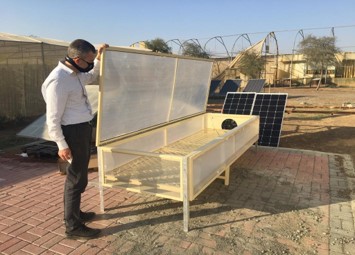
- 📍 United Arab Emirates
- 🗓 2026-06-04
- 📷 ICARDA
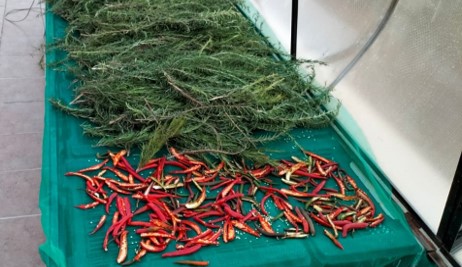
- 📍 Jordan
- 🗓 2026-06-04
- 📷 ICARDA