
SUNN HEMP AS A SOIL AMENDMENT AND FOR MITIGATION OF SALINITY
Type: Technologies
Creation: 2024-08-06 02:55 Updated: 2025-02-19 12:48
Compilers: Laksamee Mettpranee
Reviewers: William Critchley, Rima Mekdaschi Studer, Joana Eichenberger
Country/ region/ locations where the Technology has been applied and which are covered by this assessment
- Country: Thailand
- Region/ State/ Province: Nakhonratchasima
- Further specification of location (e.g. municipality, town, etc.), if relevant: Moo 5, Ban Kok Phrom, Non Thai sub-district, Non Thai district
- Map: View Map
Description of the SLM Technology
Short description of the Technology
Sunn hemp (Crotalaria juncea) has been promoted by the Land Development Department as a green manure plant with the objectives of increasing soil organic matter, improving soil fertility and reducing salinity levels.
Detailed description of the Technology
The Northeast of Thailand has the largest area dedicated to rice production in the country. However, the average yield per hectare remains low. Here, rice production heavily depends on rainfall, but distribution is inconsistent. Additionally, soil fertility is low, with a rapid decline in soil organic matter (SOM). Another significant threat to productivity in this area is salinity, with 17% of the rice production area affected.
The Land Development Department (LDD) of the Ministry of Agriculture and Cooperatives has promoted the use of soil amendments, such as green manure plants - including sunn hemp (Crotalaria juncea) - to enhance organic matter and restore soil fertility under saline conditions. Green manures are ploughed under, and incorporated into the soil to achieve their effect.
In the Non Thai district of Nakhon Ratchasima province, farmers face water shortages during the dry season, as the area lies outside the irrigation zone. Farmers, along with officers from the Land Development Department, have worked to increase SOM in degraded soils through knowledge transfer. Volunteer soil doctors and local farmers have adopted technologies that combine SOM improvement with soil and water conservation measures.
One notable example is Mr. Mana Siangsuthia: since 1997, he has collaborated with LDD officers, receiving beneficial microorganisms (PD microorganisms), green manure plants, vetiver grass, and water resources for his paddy fields. He has implemented LDD guidelines to develop his 1.12 hectare rice plot. Previously, this land was unproductive due to soil degradation caused by long-term monoculture of industrial crops and excessive use of synthetic fertilizers.
Fermented bio-extracts from banana shoots and chemical fertilizers were applied according to recommended guidelines. In 2004, rice yields averaged 1,125–1,550 kg/ha. Continuous implementation of these practices raised yields to 2,500 kg/ha by 2011. Over 16 years, using sunn hemp as a soil amendment significantly improved soil aggregate stability and reduced salinity. This success led to a shift towards natural agriculture practices in 2013, where chemical fertilizers were no longer used.
Farmers in the area now employ weather observation techniques and efficient water management strategies during dry spells. Green manure plants are sown every two years, complemented by the cultivation of salt-tolerant rice varieties, which also exhibit drought and pest resistance. These practices have resulted in rice yields of 3,125–3,750 kg/ha.
After rice harvesting, rice straw and stubble are ploughed in together with banana shoot PD 2 bio-extract. After approximately 2 weeks of decomposition, sunn hemp is sown at the rate of 31.25 kg/ha. When sunn hemp reaches 120 days, its seeds are collected. Then sunn hemp stems of around 1.2 meters height are ploughed in order to obtain more biomass.
Water conservation remains a focus in the cultivation area. During the rainy season, excess rainwater is stored for use during dry periods. Additionally, farmers employ techniques to wash salt from the soil surface into drainage channels. Water quality is enhanced using fermented bio-extracts, ensuring adequate water for dry-season cultivation.
Photos of the Technology
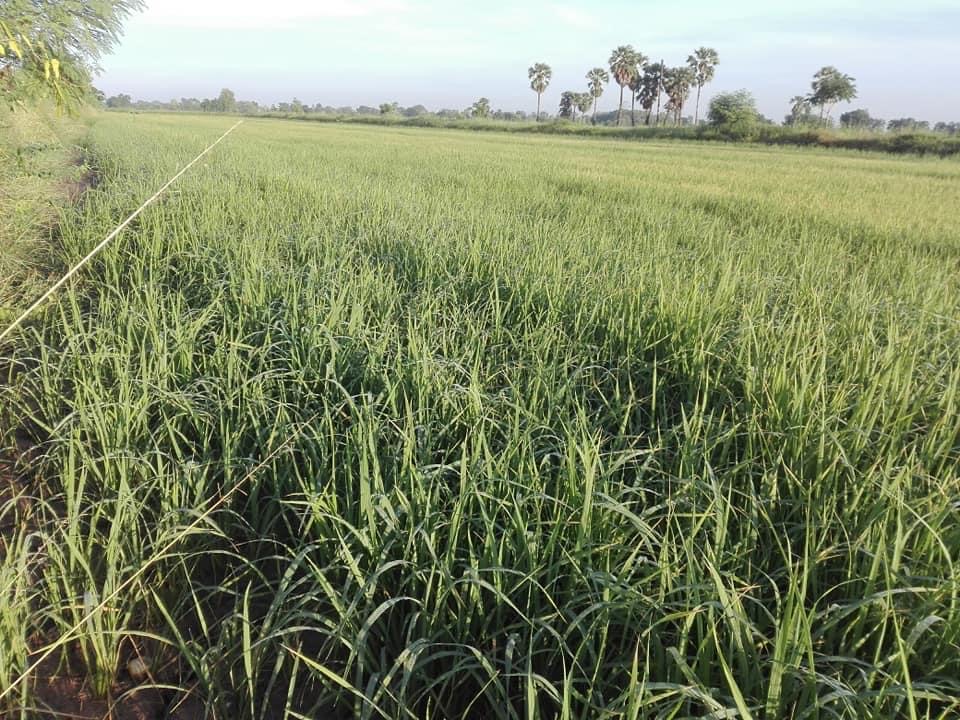
- 📍 Nonthai District, Nakhonratchasima province
- 📷 Mr. Mana Siangsunthia
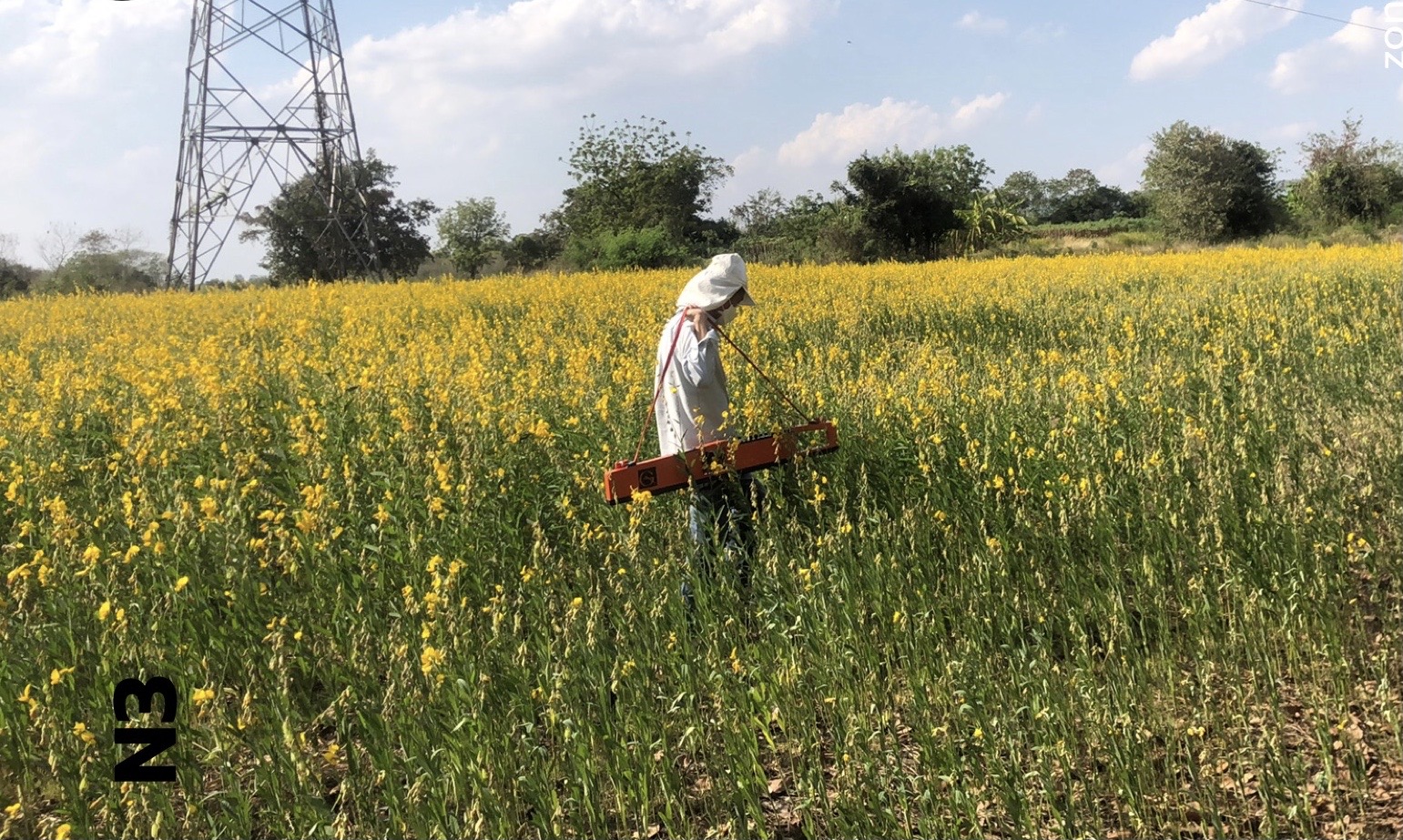
- 📍 Nonthai District, Nakhonratchasima province
- 📷 Mr. Mana Siangsunthia