
Tree Plantation Pits in Arid Zones
Type: Technologies
Creation: 2024-11-04 11:27 Updated: 2025-07-17 15:56
Compilers: Eric Lacroix
Reviewers: William Critchley, Rima Mekdaschi Studer
Country/ region/ locations where the Technology has been applied and which are covered by this assessment
- Country: Saudi Arabia
- Region/ State/ Province: Riyadh Region (Province)
- Further specification of location (e.g. municipality, town, etc.), if relevant: Thadiq National Park
- Map: View Map
Description of the SLM Technology
Short description of the Technology
Tree plantation pits are water harvesting structures which capture rainfall runoff for trees and shrubs. They receive supplementary water until seedlings are well established. Species planted are indigenous, and provide both shade and honey.
Detailed description of the Technology
Plantation pits are water harvesting structures that capture rainfall runoff for planting trees and shrubs. They are given supplementary water until vegetation is established. The pits are dug within national parks managed by the National Centre for Vegetation Cover Development and Combating Desertification (NCVC), which is the leader in this technology.
Pits may be located within wadis and sheyhib (small wadis), ranging in plots from ten to several hundred metres in length, and on high plateaux. The pits are often dug close to terraces and cross-wadi walls where runoff water is captured in the soil. Each plantation pit is rectangular, measuring (approx) 2m long, 1m wide, and up to 1m deep (depending on the depth of the soil). Spacing is from 3 to 10 metres between pits. The pits are excavated with mechanical diggers.
Pits are dug a year before planting, and they collect both runoff and the rich organic and mineral matter carried in the runoff. After one year, many annual and even perennial plants colonise the bottom of the pits. The trees and shrubs that are planted the most are Vachellia (Acacia) spp., Ziziphus spp. and Haxloylon spp. One (or two) seedlings are planted in the middle of each pit, without disturbing the existing vegetation as far as possible. These species attract bees, and beekeeping has been promoted alongside tree planting. Ziziphus honey is particularly high in value and Vachellia (acacia) honey is also good.
This water and nutrient harvesting technique is effective even in hyper-arid conditions, where rainfall may be less than 100 mm yearly. However, some supplemental irrigation is needed, and each pit is watered - every 4 months over 3 years - with a volume of water ranging from 20 to 100 litres each time per pit, depending on availability. Water is found in wadi beds and brought to the site in a bowser mounted on a lorry. Watering helps the plants to survive, and as it penetrates, it draws the roots down until they reach the water table. This is when watering can be stopped.
Although the costs are high, the results are generally very satisfactory regarding the survival rate. The local impact is significant when there are large blocks of pits and/ or greater numbers of pits per hectare (where this is possible). Over the last five years, a million pits have been dug.
Abdulla Al Eissa, the park manager, formulated the technical design of the pits, and FAO through the project "Strengthening MoEWA's Capacity to implement its Sustainable Rural Agricultural Development (SRAD) Programme (2019-2025) UTF/SAU/051/SAU" has been responsible for technical advice on locating pits, spacing and layout timing of operations, fertilization and planting operations. The activities are part-funded by the NCVC, while local donors and volunteers contribute the remainder.
Photos of the Technology
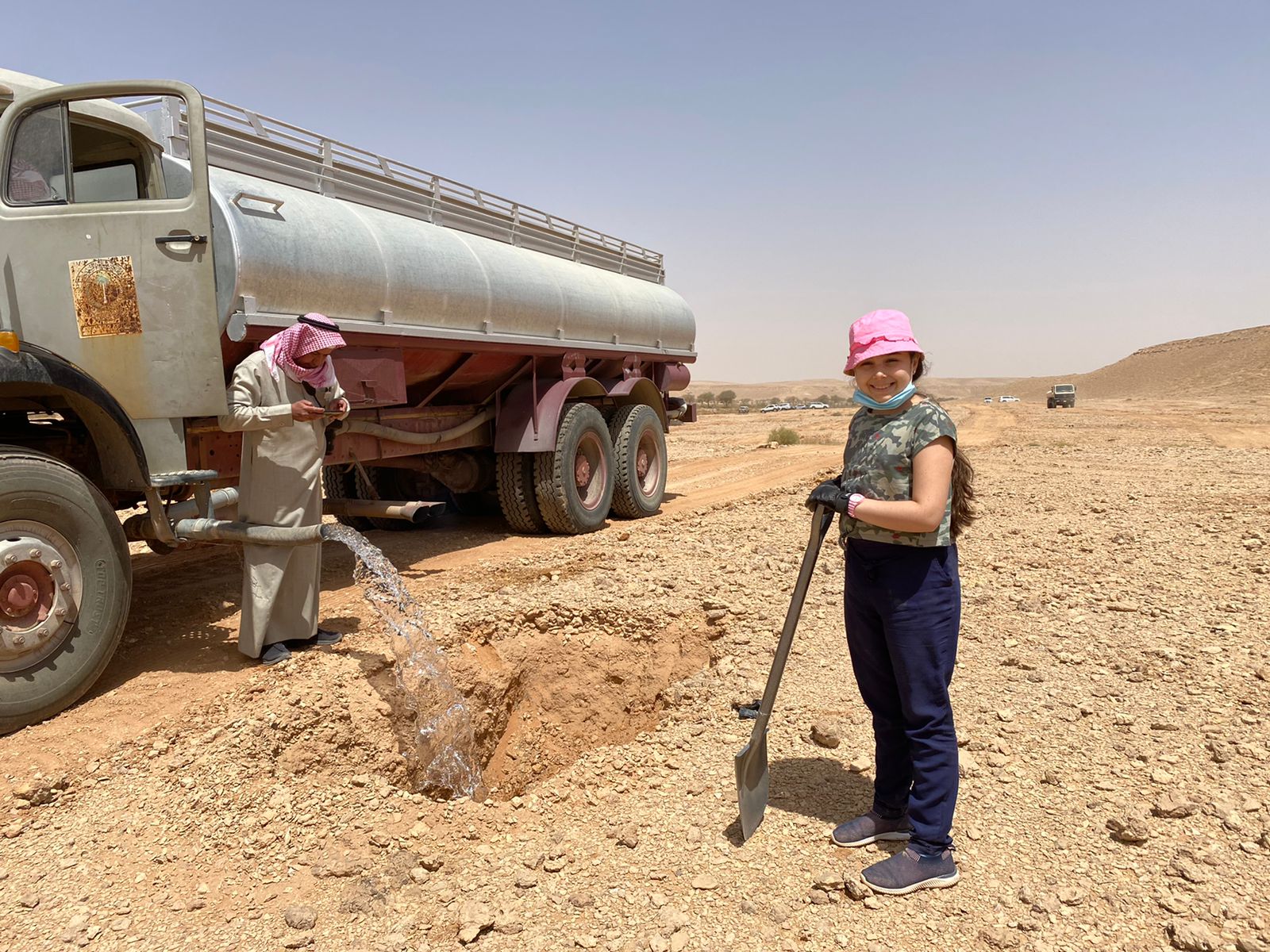
- 📍 Thadiq National Park
- 🗓 2022-03-07
- 📷 Éric Lacroix
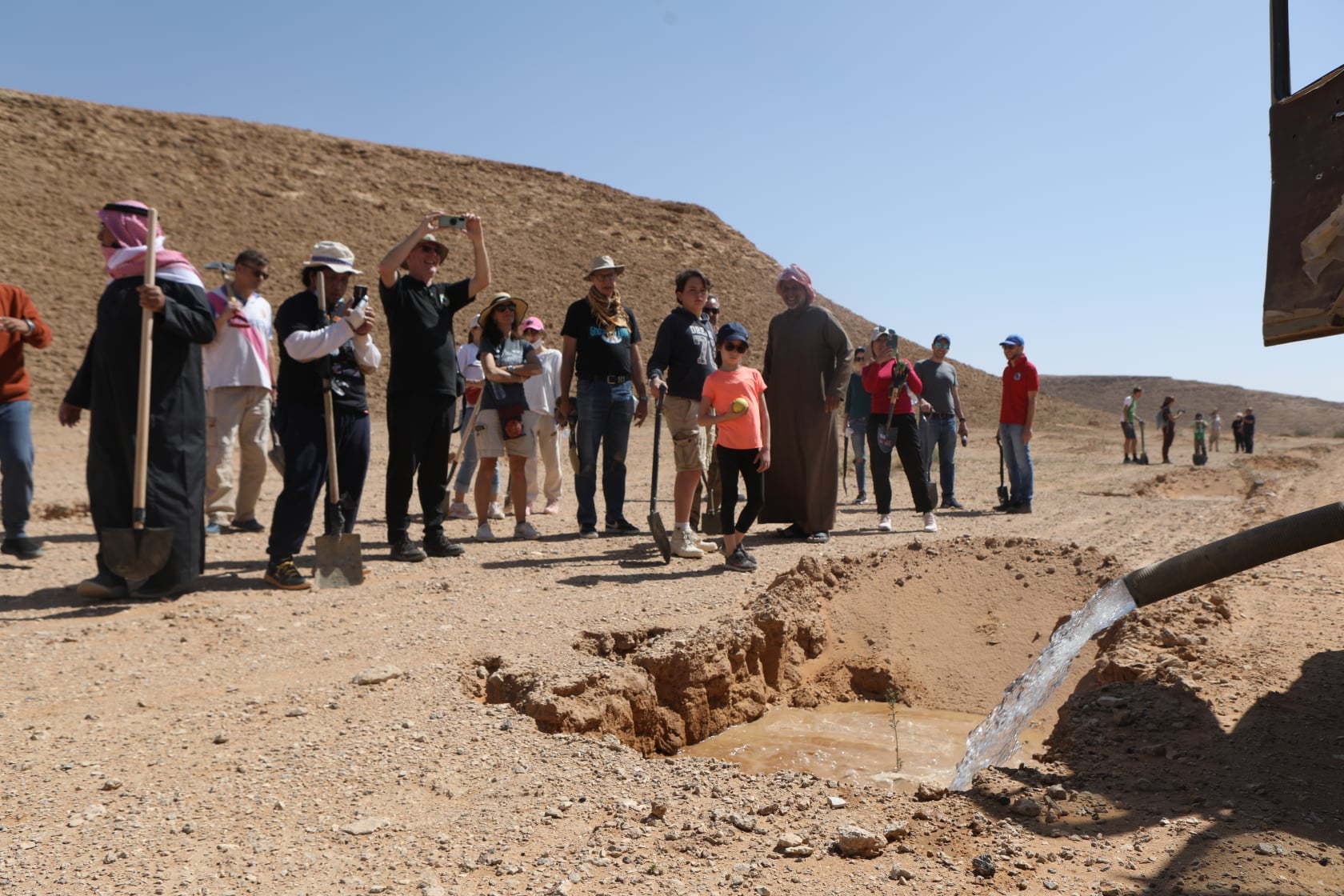
- 📍 Thadiq National Park
- 📷 Eric Lacroix
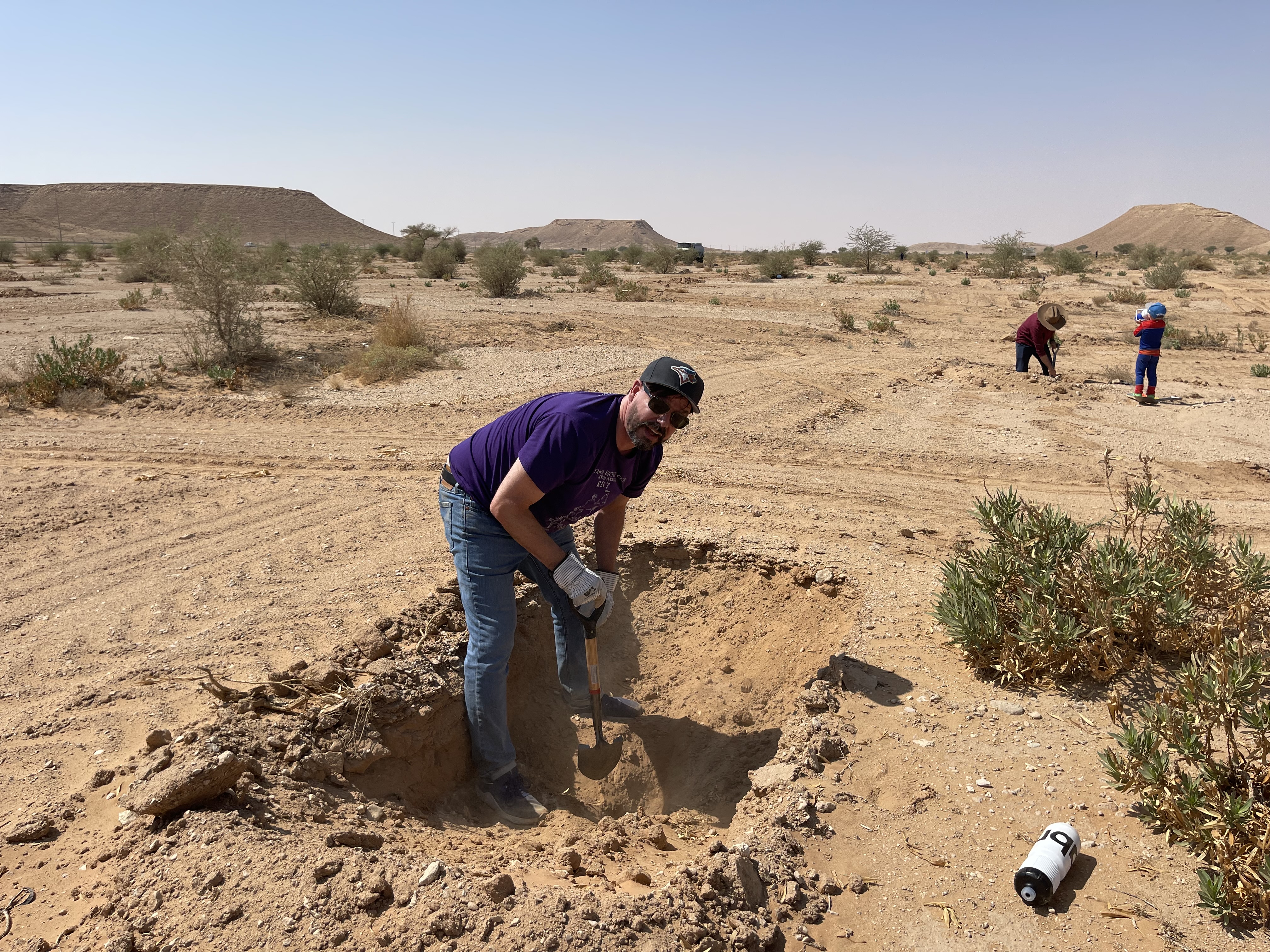
- 📍 Thadiq National Park
- 📷 Eric Lacroix