
Multi-storey intercropping with coffee and fruit trees
Type: Technologies
Creation: 2024-11-08 10:34 Updated: 2025-03-21 19:57
Compilers: Carlos Gil Picon
Reviewers: William Critchley, Rima Mekdaschi Studer
Country/ region/ locations where the Technology has been applied and which are covered by this assessment
- Country: Viet Nam
- Region/ State/ Province: Dak Nong
- Further specification of location (e.g. municipality, town, etc.), if relevant: Hung Binh commune
- Map: View Map
Description of the SLM Technology
Short description of the Technology
Robusta coffee in the Central Highlands of Vietnam is intercropped with pepper vines and fruit trees thus increasing the total planting density. This leads to higher land equivalent ratios compared to monocropping, thereby increasing land use efficiency, profitability, soil protection and resilience.
Detailed description of the Technology
Robusta coffee in the Central Highlands of Vietnam is intercropped with pepper vines and fruit trees, increasing the total planting density. This leads to higher land equivalent ratios (LER) compared to monocropping, thereby increasing land use efficiency, profitability and resilience. The increased plot-level biomass stock also confers better soil protection, and more biomass is returned to the soil through prunings and natural litter formation.
There are a variety of multi-storey intercropping designs based on coffee (Coffea canephora), black pepper (Piper nigrum), avocado (Persea americana), durian (Durio zibethinus) and macadamia (Macadamia integrifolia). An example of a recommended intercropping design is coffee with pepper vines (supported by living poles of Ceiba pentandra, Cassia siamea, Paulownia spp. etc) and fruit trees at densities of 887 coffee bushes, 336 pepper vines, 28 avocado trees and 28 durian trees per hectare (D’Haeze 2022; Rigal et al. 2023). Agronomic practices such as irrigation and nutrient management need to be adapted to this system. For example, water demand by coffee in the shade of fruit trees is less than in monocropping systems. Other practices can be combined, such as the use of cover crops (e.g., Crotalaria) planted between the other crops to avoid bare land.
This technology is increasingly applied in Dak Lak, Gia Lai, Lam Dong and Dak Nong in the Central Highlands of Vietnam, primarily by the Kinh farmers, while ethnic minorities currently rely more frequently on monocropped coffee systems.
The main purpose of this diversified mixed cropping system it to increase land use efficiency as well as productive, climatic and economic resilience. Price volatility is a huge challenge for farmers, particularly with perennial cropping systems where crop changes as response to economic signals is costly and risky due to time-lag effects.
Quality planting material (e.g., use of scion avocado cultivar 034 for grafting), water-saving irrigation systems, and organic and mineral fertilizers are required alongside a careful planting design that minimizes potential competition between associated crops. For example, the Ministry of Agriculture and Rural Development (MARD) provides guidelines (Decision No. 3702, 2018) for designing intercropping systems based on coffee.
The main benefit is economic resilience to volatile prices of perennial commodity crops. Given that perennial crops cannot be easily substituted with other crops that have better prices, diversification of cropping systems is key to economic resilience. Furthermore, land use efficiency is increased and thereby more crops can be produced using less area. Tree-level yields remain the same as in monocropping systems, however, after certain years of fruit tree growth (e.g., avocado) there is a potential of coffee tree-level yield decline due to shade effects. It also helps to manage production costs when crops need to be rejuvenated or replanted. Furthermore, carbon stocks in aboveground biomass are increased compared to monocropping systems. This increase in aboveground carbon stocks leads to higher biomass input to the soil due to fresh litter (prunings) and senescent litter (natural).
Land users choose this intercropping model to diversify their income on the same unit of land. This reduces the risks associated with unpredictable price fluctuations. They also note that this system improves resource use efficiency, requiring less fertilizers and irrigation compared to the monocropping systems.
Photos of the Technology
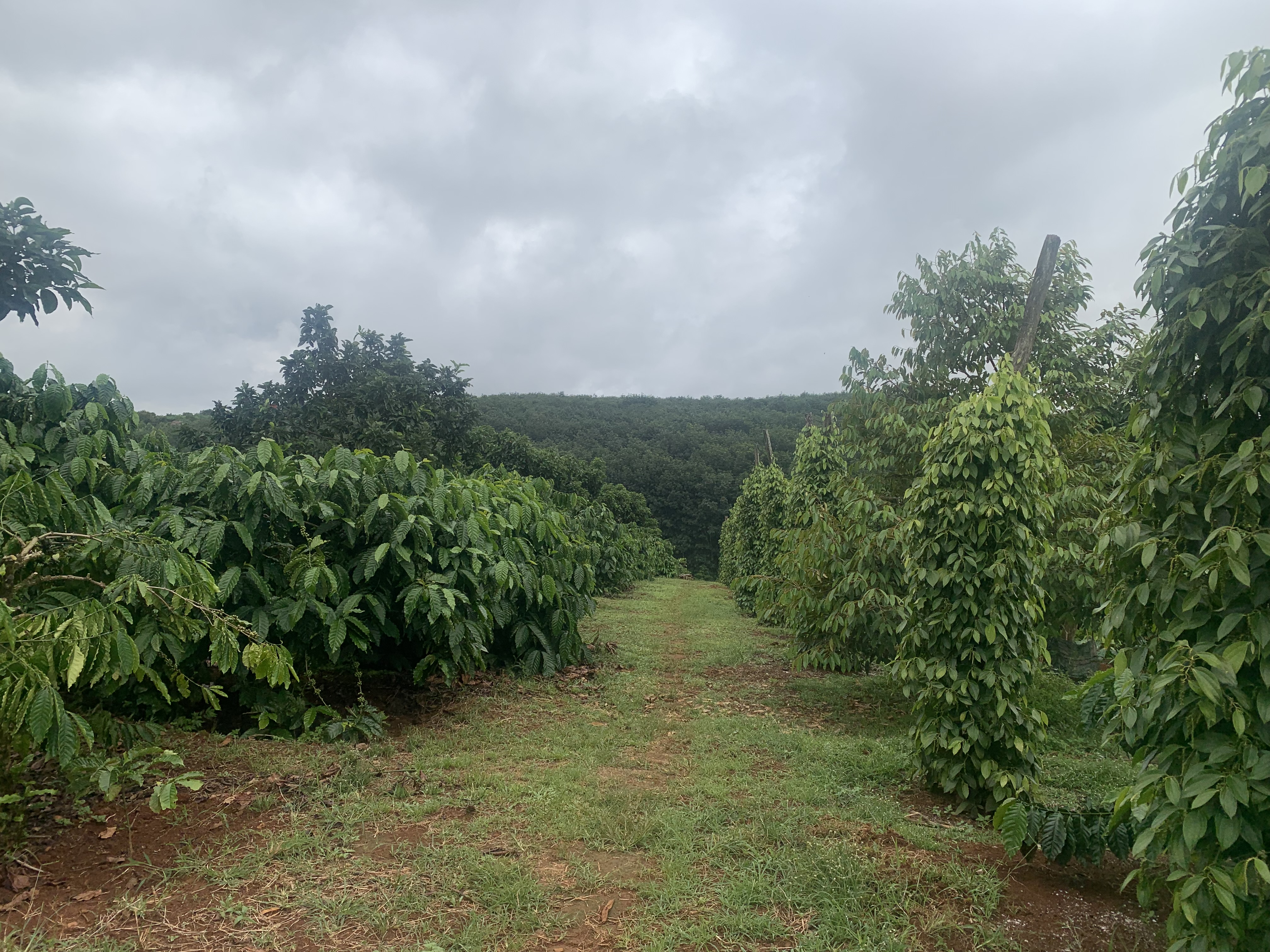
- 📍 Hung Binh commune, Dak Nong, Vietnam
- 🗓 2023-01-07
- 📷 Tuan Ha
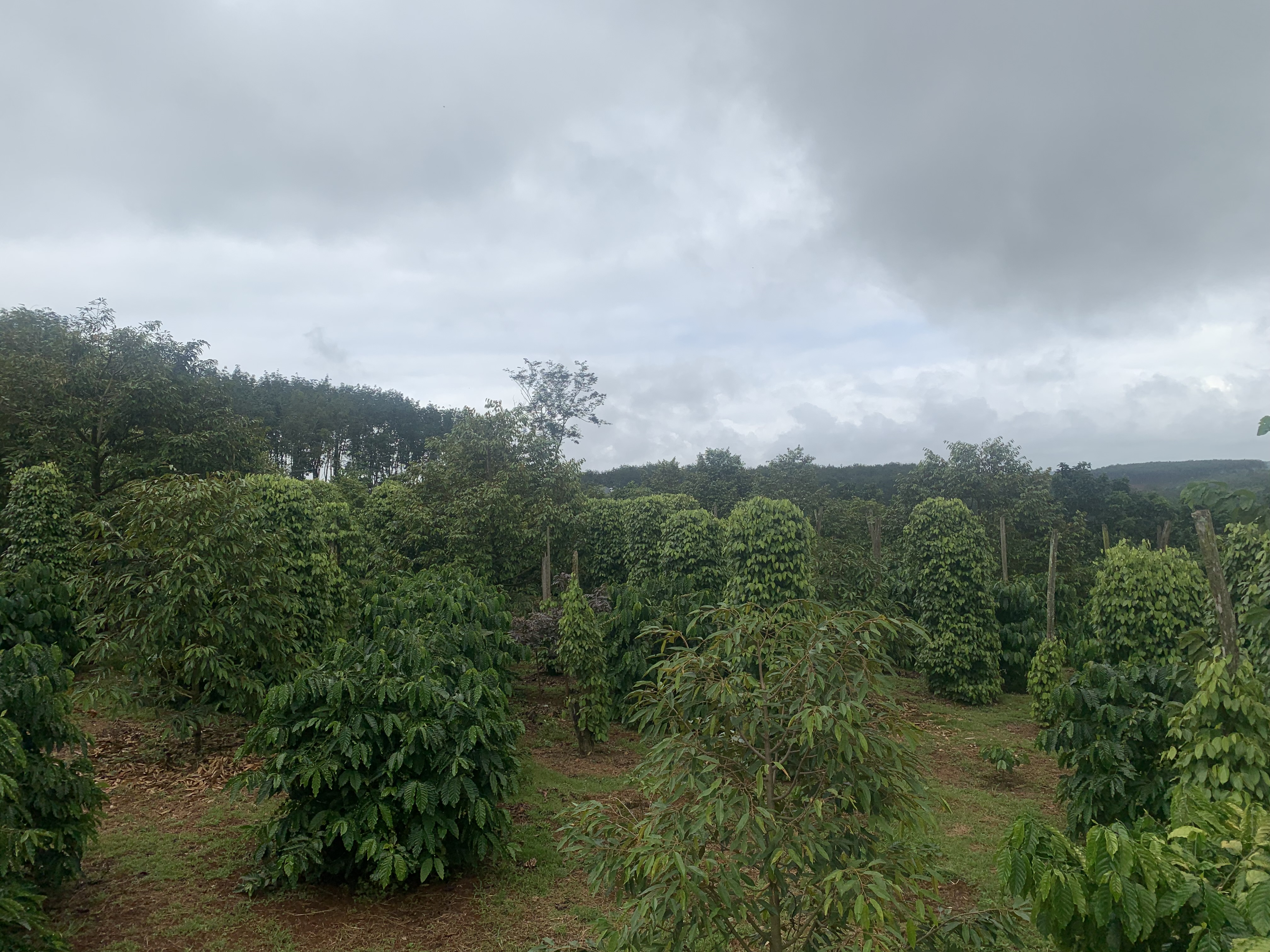
- 📍 Hung Binh commune, Dak Nong, Vietnam
- 🗓 2023-01-07
- 📷 Tuan Ha