
Agroforestry to improve soil fertility, water retention, and sustainable income for local communities
Type: Technologies
Creation: 2024-12-01 10:42 Updated: 2025-11-04 08:51
Compilers: Ahmad Zia Jalalzai
Reviewers: Rima Mekdaschi Studer, Illias Animon, Muhammad Ishaq Safi
Country/ region/ locations where the Technology has been applied and which are covered by this assessment
- Country: Afghanistan
- Region/ State/ Province: Southeastern Ghazni province
- Further specification of location (e.g. municipality, town, etc.), if relevant: The technology is applied in 44 villages through 7 Rangeland Management Associations (RMAs). Hemat and Faqir are sample villages reflected in the map.
- Map: View Map
Description of the SLM Technology
Short description of the Technology
The Agroforestry system in Malistan district combines traditional practices with support from the Community-Based Sustainable Land and Forest Management project in Afghanistan. This initiative provides technical support, training, and resources like apple trees, fertilizers, and alfalfa seeds to establish 400 orchards (1,000 m² each). The goal is to enhance community livelihoods by reducing dependence on rangelands, helping to preserve local ecosystems.
Detailed description of the Technology
The agroforestry system adopted in the mountainous districts of Ghazni province, particularly in Navor and Malistan district is an innovative approach that is transforming the way local farmers cultivate their land. This system integrates agricultural crops, tree cultivation, and livestock farming to maximize land productivity while promoting environmental sustainability. At the heart of the system are apple orchards, alfalfa seeds, and fertilizers, which work together to enhance food security, provide livestock feed, and improve soil fertility. Supported by modern agricultural techniques, the project includes a total of 400 orchards, each covering 1,000 square meters, helping to alleviate pressure on overgrazed rangelands while improving local livelihoods.
This agroforestry method is particularly well-suited to Ghazni’s rugged terrain, where farming communities rely heavily on livestock and rangelands for sustenance. However, the region’s dry climate, frequent overgrazing, and ongoing land degradation have made traditional farming increasingly unsustainable. By introducing apple trees and alfalfa cultivation, farmers now have an alternative source of income and animal feed while actively restoring degraded lands. Alfalfa serves as a nutrient-rich fodder for livestock, and in return, livestock manure is used as fertilizer, creating a self-sustaining agricultural cycle that enhances soil health.
Beyond its environmental benefits, this system plays a crucial role in improving livelihoods. By diversifying agricultural production, it enhances food security and generates additional income for local farmers. More importantly, it helps alleviate the burden on fragile rangelands by offering an alternative source of livestock feed, reducing overgrazing and preventing further land degradation. Through natural nutrient recycling, alfalfa provides essential fodder for livestock, while their manure replenishes soil nutrients, ensuring long-term soil fertility.
To successfully implement and maintain this system, several key activities and inputs are required. Local farmers receive specialized training and technical support to equip them with the necessary skills. Essential supplies, including apple saplings, fertilizers, and alfalfa seeds, are provided to help establish the orchards. Additionally, proper maintenance, such as irrigation, pruning, and weed control, ensures that the orchards remain productive. Soil and water conservation efforts, such as constructing contour banks and water diversion structures, further safeguard the land against erosion and water loss.
The impact of this technology extends far beyond the fields. Environmentally, it significantly reduces soil erosion, improves water retention, and restores soil health. Economically, it increases household income by boosting apple production and generating sales from alfalfa as livestock feed. Socially, it strengthens community resilience by offering a reliable source of food and income, while encouraging the adoption of sustainable farming practices.
While many farmers appreciate the system for its cost-effectiveness, sustainability, and diverse benefits, some challenges remain. Because of the duration for fruit production of apple trees are typically taking three to four years to bear fruit, patience and long-term planning is crucial. Additionally, the dry climate means that farmers must invest extra time and effort in irrigation, especially during drought periods, to ensure optimal growth and fruit yield. Despite these challenges, the agroforestry system in Malistan and Navor presents a promising solution for sustainable land management and rural development.
Photos of the Technology
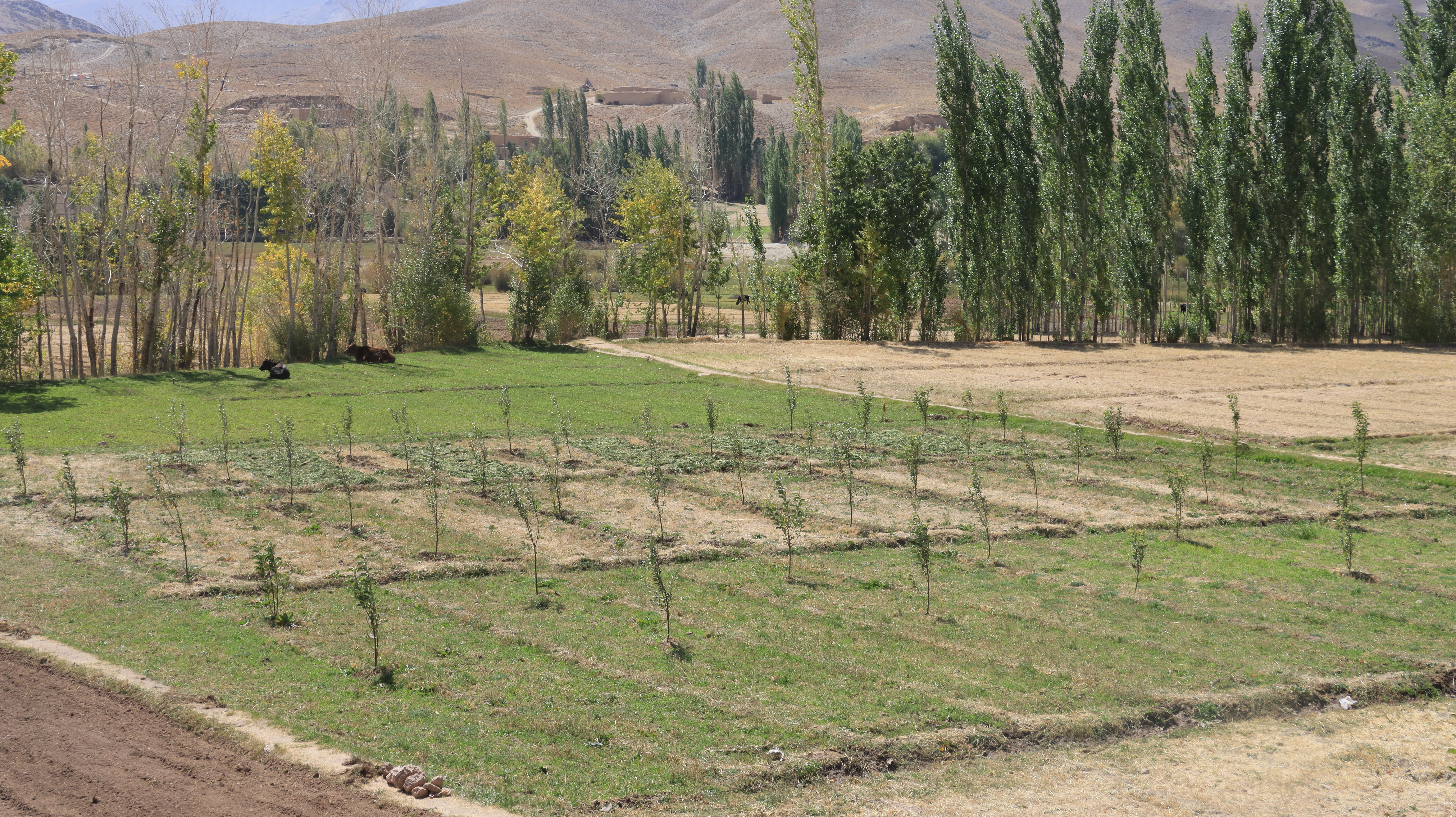
- 📍 Ghazni, Malistan district
- 🗓 2024-08-17
- 📷 Baz Mohammad
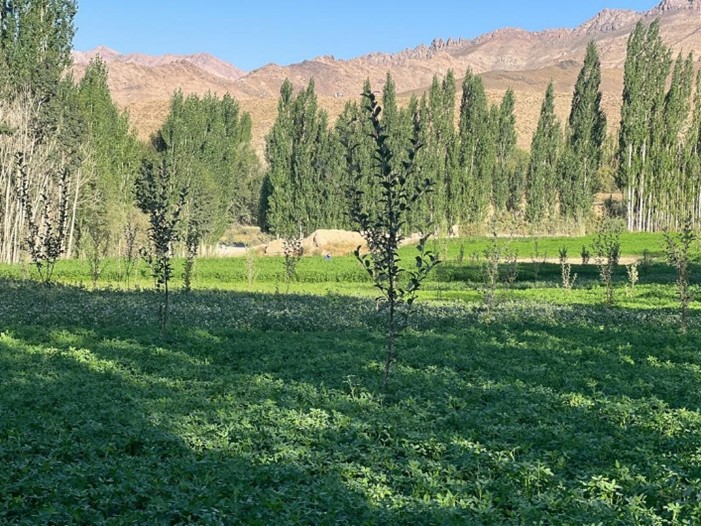
- 📍 Malistan district, Ghaibi Village
- 📷 Baz Mohammad