
Community seed banks
Type: Technologies
Creation: 2025-05-23 07:58 Updated: 2025-06-17 09:29
Compilers: Pratik Ramteke
Reviewers: Rima Mekdaschi Studer, William Critchley
Country/ region/ locations where the Technology has been applied and which are covered by this assessment
- Country: India
- Region/ State/ Province: Maharashtra
- Further specification of location (e.g. municipality, town, etc.), if relevant: Kumbharwadi village, Tal. Sangamner, Dist: Ahilyanagar
- Map: View Map
Description of the SLM Technology
Short description of the Technology
A community-based seed bank system is a locally managed initiative where farmers and community members collect, store, and share seeds to ensure germplasm and food security, preserve crop diversity, and support sustainable agriculture. These banks are governed by community rules.
Detailed description of the Technology
Community Seed Banks (CSBs) are locally governed systems designed to enhance food and seed security, promote sustainable, climate-resilient farming as well as conserving agrobiodiversity. CSBs bridge traditional agricultural knowledge with evolving best practices, ensuring the continuity of seed diversity adapted to local conditions.
A key function of CSBs is seed preservation and exchange. They provide for the collection of seeds from farmers, prioritizing varieties that have demonstrated superior local adaptation. Seeds are carefully cleaned, dried, and tested for viability before being stored—typically in clay pots in a simple building. The preserved seeds can be used in future planting seasons or distributed during droughts, floods, or pest outbreaks, thereby ensuring timely access to reliable seed material.
A CBS conserves and manages a diverse range of locally important crops including both cereals (sorghum and maize) and legumes (black grams, chickpeas, cowpeas, green grams, green peas, groundnuts, horse grams, red grams, and soybeans). Several traditional and improved cultivars of each crop are stored, selected on their performance under local conditions, including drought tolerance, pest and disease resistance, yield stability, and cultural preference. The quantity of seeds stored per cultivar ranges from 500 grams to 100 kilograms, depending on availability and community demand. For seed protection, both indigenous practices and materials such as wood ash, neem leaves (Azadirachta indica), and chili extract (Capsicum frutescens) are used to prevent pest infestation during storage, minimizing reliance on commercial pesticides.
Management of CSBs is local and participatory. They are generally governed by elected community committees that set the rules for deposit, withdrawal and replenishment. This governance structure ensures that the seed bank reflects the specific needs and knowledge systems of the community. Community engagement is not only vital for operational success but also fosters a sense of ownership and collective responsibility.
CSBs play a multifaceted role. They contribute to agrobiodiversity conservation by safeguarding traditional and wild crop varieties, which are invaluable for future breeding programs. Furthermore, they ensure that farmers can access seeds during critical periods. Additionally, CSBs promote sustainable agricultural practices by reducing reliance on commercial seed systems. They also help to document and share traditional farming knowledge.
The operational structure of a CSB begins with community mobilization and capacity-building focused on seed selection, handling, and storage. Infrastructure requirements are modest. Maintenance involves tasks such as viability testing to ensure the germination potential of stored seeds.
CSBs enhance the resilience of agricultural systems by enabling communities to recover swiftly from crop failures: they also reduce input costs. Furthermore, CSBs empower communities—particularly smallholder farmers and women. Moreover, these banks store vital genetic material for future research.
From a community perspective, the benefits are substantial. However, challenges remain. High initial investments in infrastructure and training are required, and ongoing success depends on strong community engagement and diligent record-keeping. Nevertheless, by preserving the genetic heritage of crops and empowering local communities, CSBs reduce contribute to food sovereignty
Photos of the Technology
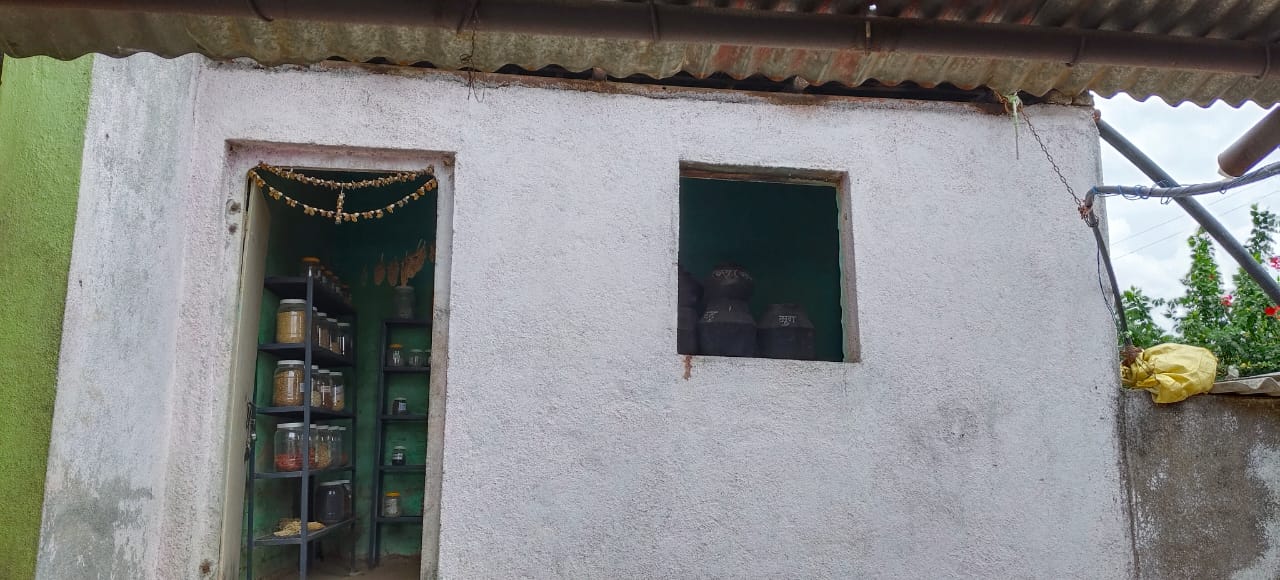
- 📍 Kumbharwadi, Ta. Sangamner, Dist. Ahilyanagar
- 📷 Pratik Ramteke
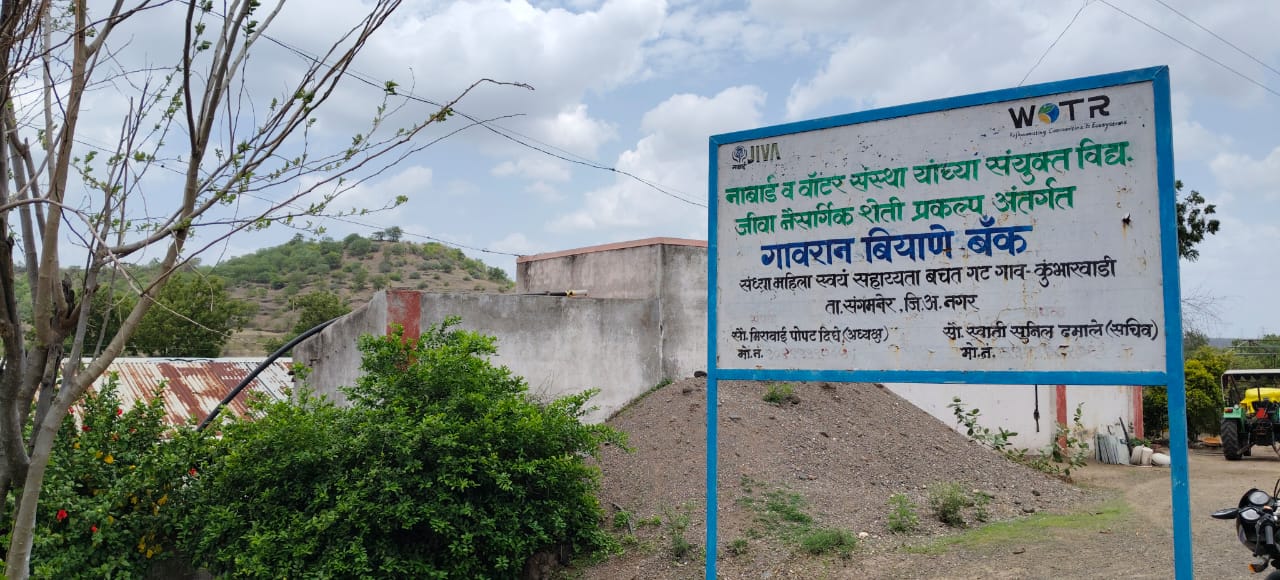
- 📍 Kumbharwadi, Ta. Sangamner, Dist. Ahilyanagar
- 📷 Pratik Ramteke