
Conversion of conventional monoculture farmland into a food forest
Type: Technologies
Creation: 2025-10-27 08:26 Updated: 2026-03-16 11:29
Compilers: Tom Cohen
Reviewers: William Critchley, Rima Mekdaschi Studer
Country/ region/ locations where the Technology has been applied and which are covered by this assessment
- Country: Israel
- Region/ State/ Province: Galilee
- Further specification of location (e.g. municipality, town, etc.), if relevant: Bethlehem of Galilee
- Map: View Map
Description of the SLM Technology
Short description of the Technology
Converting conventional monoculture farmland into a food forest-based agroforestry system restores soil health, increases vegetation cover, enhances biodiversity while diversifying production. The intervention improves soil organic matter and ecological resilience through multi-storey planting, reduced soil disturbance, and nature-based land management.
Detailed description of the Technology
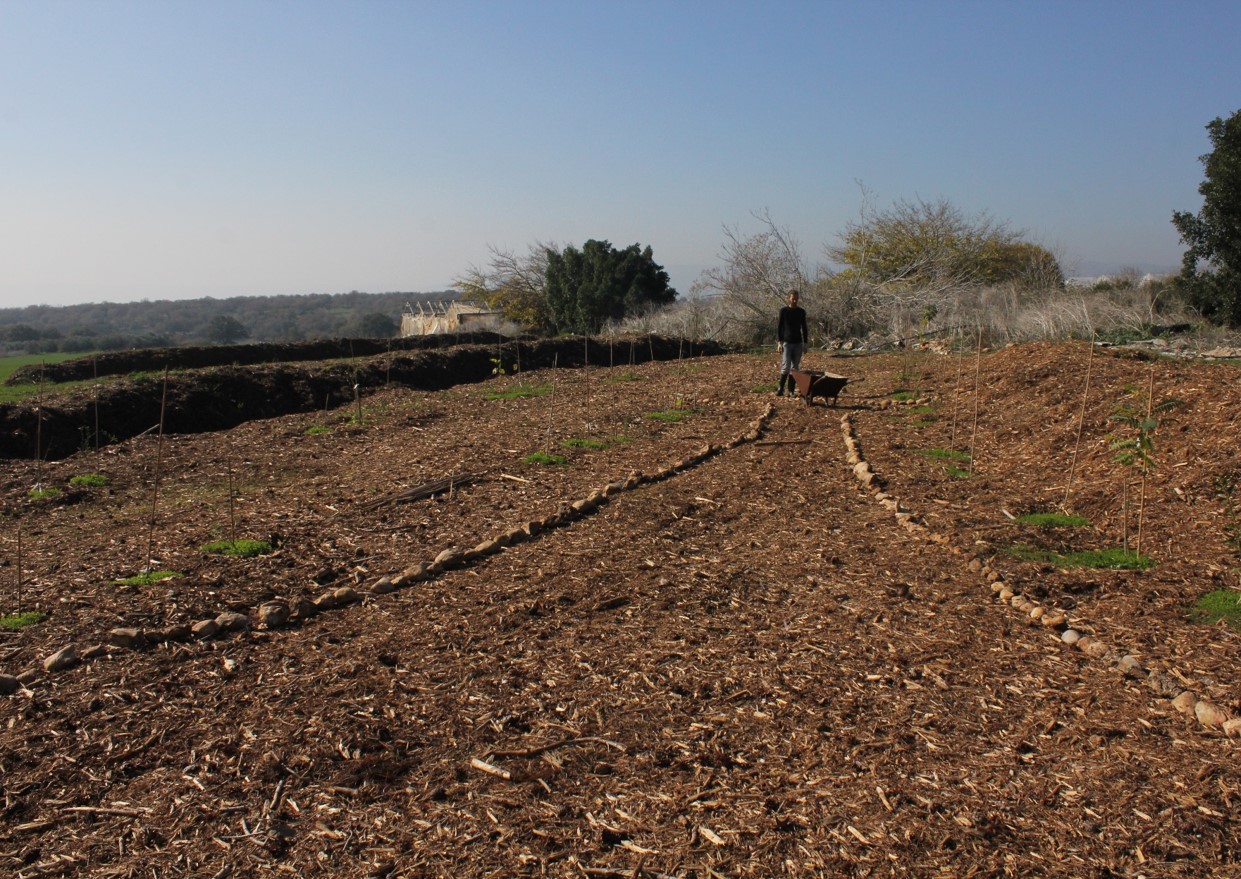
The development of a “food forest” was in response to visible soil degradation caused by years of wheat-based monoculture in Bethlehem of Galilee. The previous land use consisted of annual wheat production, tractor-powered deep ploughing, and routine use of herbicides and pesticides. Over time, these practices depleted soil organic matter, reduced microbial activity, and increased vulnerability to erosion, compaction, and moisture loss. The current food forest, covering approximately 1.5 acres (0.6 hectare), represents a transformative shift from this intensive, extractive system toward a sustainable, perennial, multi-strata agroforestry model.
The primary purpose of this site is research and education. It is not intended to be a commercial enterprise, but to demonstrate principles and practices of sustainable land management. The income generated is not from crops but from research grants, workshops and community activities.
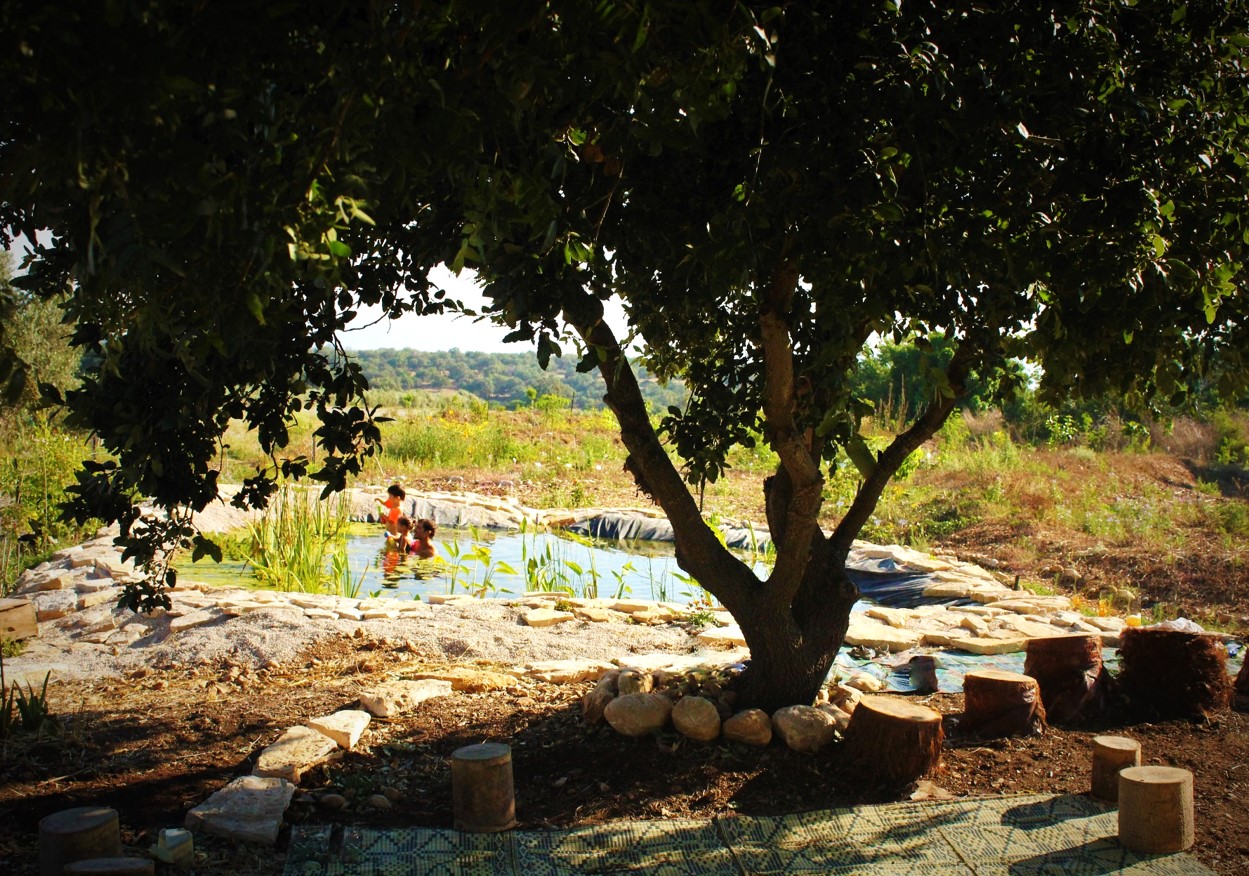
The site has been under continuous restoration for approximately eight years, during which it has gradually developed into a multi-layered food forest. The upper canopy includes species such as ficus, tipa, mulberry, pecan, plane trees, and nitrogen-fixing “ice-cream bean” (Inga edulis), which together generate shade, biomass, and structural diversity. The productive mid-storey contains fruit-bearing species including lemon, plum, pomegranate, avocado, and additional deciduous trees. Beneath these layers, aromatic shrubs such as lavender and rosemary provide perennial cover, habitat complexity, and year-round biomass production. A dedicated lower layer supports seasonal vegetables: carrots, radishes, turnips, lettuces and other greens, interplanted within tree alleys and cultivated using organic methods.
Production follows a diversified model typical of food forests. Tree crops currently yield modest but consistent quantities of lemons, plums, mulberries, pomegranates, and herbs, primarily for consumption by visitors, volunteers, and workers on site rather than large-scale commercial sale. The adjoining vegetable-growing area produces additional crops for small-scale marketing, providing a modest revenue stream while maintaining ecological integrity. As the system is still maturing, productive output is expected to increase over the coming years.
The project is privately managed by a couple in their thirties, who own and oversee all aspects of the site. Labour requirements were most intensive during the establishment phase of planting, mulching, earth-shaping, and infrastructure setup. As the food forest enters a more stable successional stage, labour demands have gradually decreased, with current activities centred on pruning, biomass recycling, vegetable cultivation, and occasional enrichment planting. No chemical inputs are applied at any stage.
Irrigation was originally supported by a drip system installed to establish young trees and early perennial layers. Today, irrigation needs have significantly decreased due to higher soil organic matter, increased shade, and improved microclimate regulation. Drip irrigation is now used only minimally and mainly within the annual vegetable plots, while most perennial components rely primarily on natural rainfall.
Overall, this food forest demonstrates a replicable nature-based solution for Mediterranean environments, showcasing how degraded wheat monoculture fields can be restored into resilient, biodiverse, and ecologically functional agroforestry systems. The long-term transition highlights substantial gains in soil health, water retention, and landscape diversity, while supporting small-scale production and community-oriented engagement.
Photos of the Technology
- 📍 Bethlehem of Galilee
- 🗓 2017-01-06
- 📷 Yuli Betzer
- 📍 Bethlehem of Galilee
- 🗓 2017-01-06
- 📷 Yuli Betzer