
Keyhole Garden
Type: Technologies
Creation: 2016-11-29 18:00 Updated: 2019-03-19 14:39
Compilers: John Brogan
Reviewers: Alexandra Gavilano, Deborah Niggli, Alvin Chandra, Joana Eichenberger
Country/ region/ locations where the Technology has been applied and which are covered by this assessment
- Country: Bangladesh
- Region/ State/ Province: Kurigram District / Rajshahi and Barguna District / Barisal
- Further specification of location (e.g. municipality, town, etc.), if relevant: Kurigram municipality (Kurigram), Patharghata Union (Barguna)
- Map: View Map
Description of the SLM Technology
Short description of the Technology
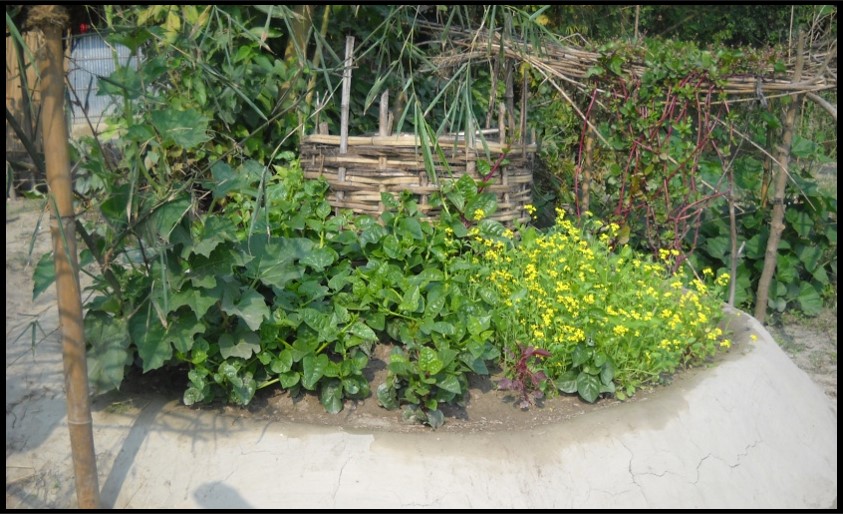
The Keyhole Garden model of homestead vegetable cultivation enhances the resilience of families living in areas with climate-related hazards, such as flooding and drought. Keyhole gardens have been shown to increase vegetable production in all seasons, thereby improving household food autonomy and dietary diversity.
Detailed description of the Technology
First initiated in Ugandan communities by Send a Cow UK, the keyhole garden technique is widespread in Africa. In 2011, Terre des hommes (Tdh) and Greendots piloted Keyhole Gardens for the first time in Asia, effectively adapting the design and methodology in Africa to the conditions of flood prone areas of Bangladesh, and eventually India. The garden is a good way to enhance dietary diversity, especially for poor/landless families.
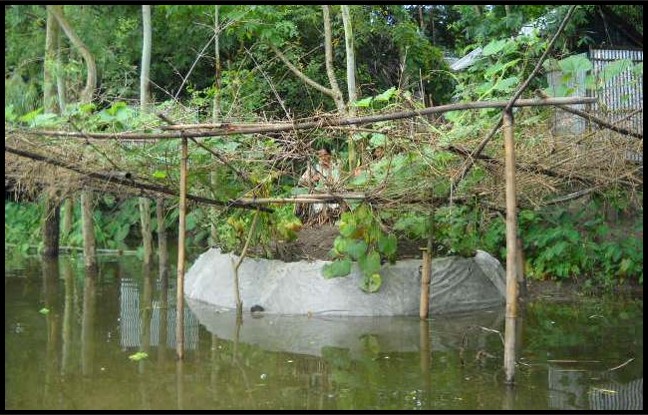
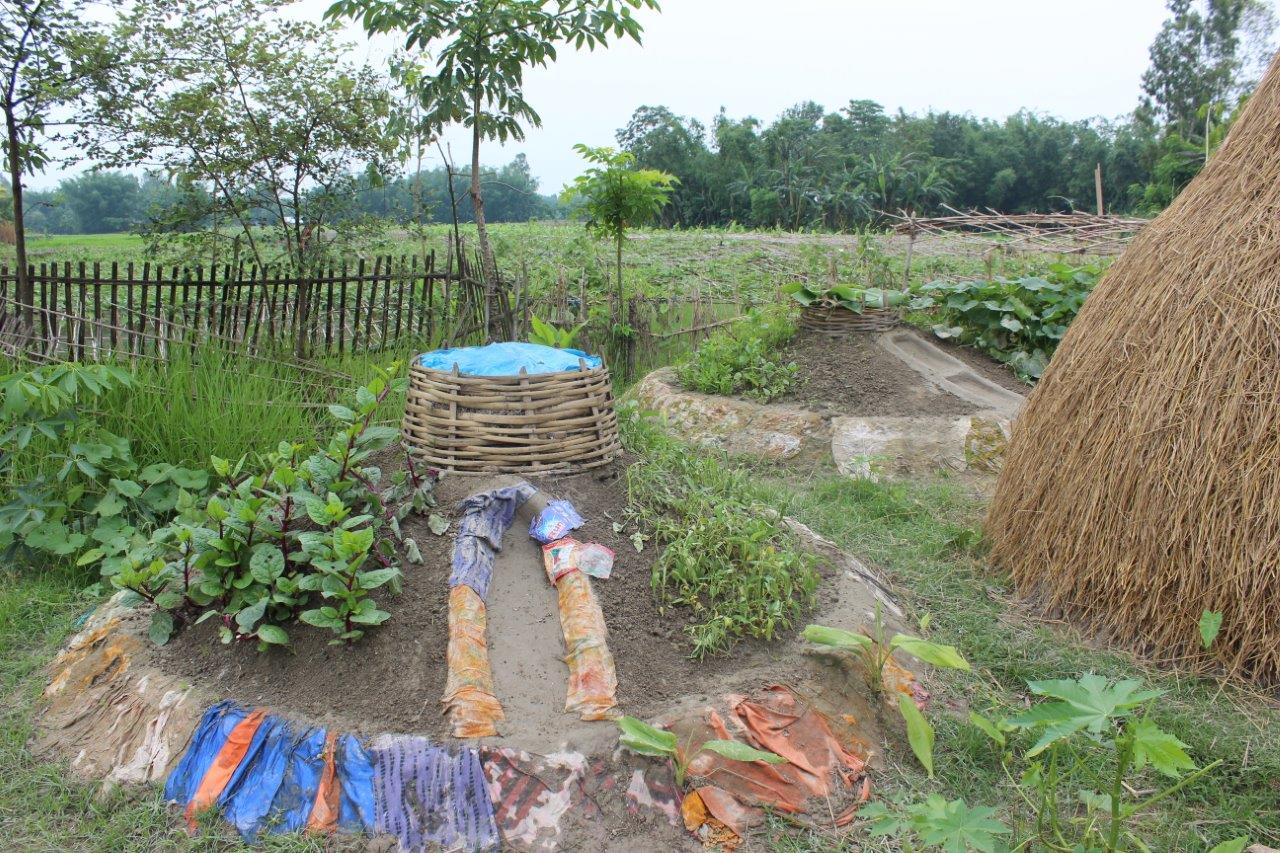
Keyhole gardens consist of a raised circular garden made of clay, shaped like a horseshoe or keyhole, with a maximum diameter of approximately three meters. For flood prone areas in Bangladesh and India, the plinth height depends on the location and is typically the same as the house plinth to resist flooding. A compost basket is built at the center of the garden. Organic matter (kitchen cuttings) and residual water are added on a regular basis through the compost pit. In some countries, bricks or stones are used to make the plinth.
The keyhole garden is a typical Low External Input Sustainable Agriculture (LEISA) approach that includes integrated composting, water retention, use of local materials, natural pest and disease control techniques, natural soil fertility measures, and proximity to the kitchen for both harvesting and care of the garden. In regions with mild conditions of flooding, tidal surge and drought, the garden increases the duration of gardening period during the year thus reducing the risk of disaster. In the aftermath of cyclone Mahasen, keyhole gardens demonstrated DRR utility: although many were partially damaged, none had to be rebuilt entirely. Where plants did not survive the storm, users were able to sow seeds immediately. On the other hand, the traditional ground-level plots used for pit and heap gardening were completely flooded / waterlogged and unusable.
Benefits of the technology include: compact size, proximity to the household for convenient maintenance and harvesting, composting of kitchen cuttings in the basket; and an ergonomic structure (raised, accessible). The small size is also ideal to facilitate training on vegetable growing, soil fertility and pest & disease management to first-time gardeners and students in schools. Keyhole gardens are highly productive—in Lesotho a typical garden can satisfy vegetable needs for a family of eight persons (FAO, 2008). Combined, these factors are scalable as an appropriate technology for landless and marginal farmers. In Bangladesh, the gardens enabled families to produce vegetables even during the monsoon period. As the keyhole garden normally does not need to be rebuilt every year it is a more efficient technique in the long-term than traditional methods such as pit and heap.
Users say that their garden produce tends to be larger and tastier than conventional gardens or market produce; and many indicated that they were able to meet their own vegetable consumption needs and to sell surplus or gift vegetables. For some women it was difficult to access sufficient amounts of soil, which meant that they needed to walk long distances to build the plinth. (Fortunately many received support from other villagers.) Secondly, during the monsoon, while most of the land is flooded, the keyhole garden remains dry. Consequently, it may provide shelter to certain animals (e.g. rats) and attract higher number of pests. Regardless of these two limitations users agree that the benefits greatly
outweigh any observed limitations.
Photos of the Technology
- 📍 Kurigram, Kurigram District, Rajshahi Division, Bangladesh
- 📷 Sultana Al-Amin
- 📍 Kurigram, Kurigram District, Rajshahi Division, Bangladesh
- 📷 Sultana Al-Amin
- 📍 Patharghata, Barguna District, Barisal Division, Bangladesh
- 🗓 2013-06-06
- 📷 Rob Van Hout